When a storm knocks out power or closes the roads, the first three days are the hardest. Ready.gov, the federal preparedness site, suggests keeping at least several days of food and water at home, and the classic rule for water is one gallon per person per day. Here is how we would stock a simple 72-hour shelf from our own aisles.
1. Food that needs no fridge
Pick things you would happily eat on a normal day, so nothing goes to waste. Shelf-stable meals and sides are the backbone:
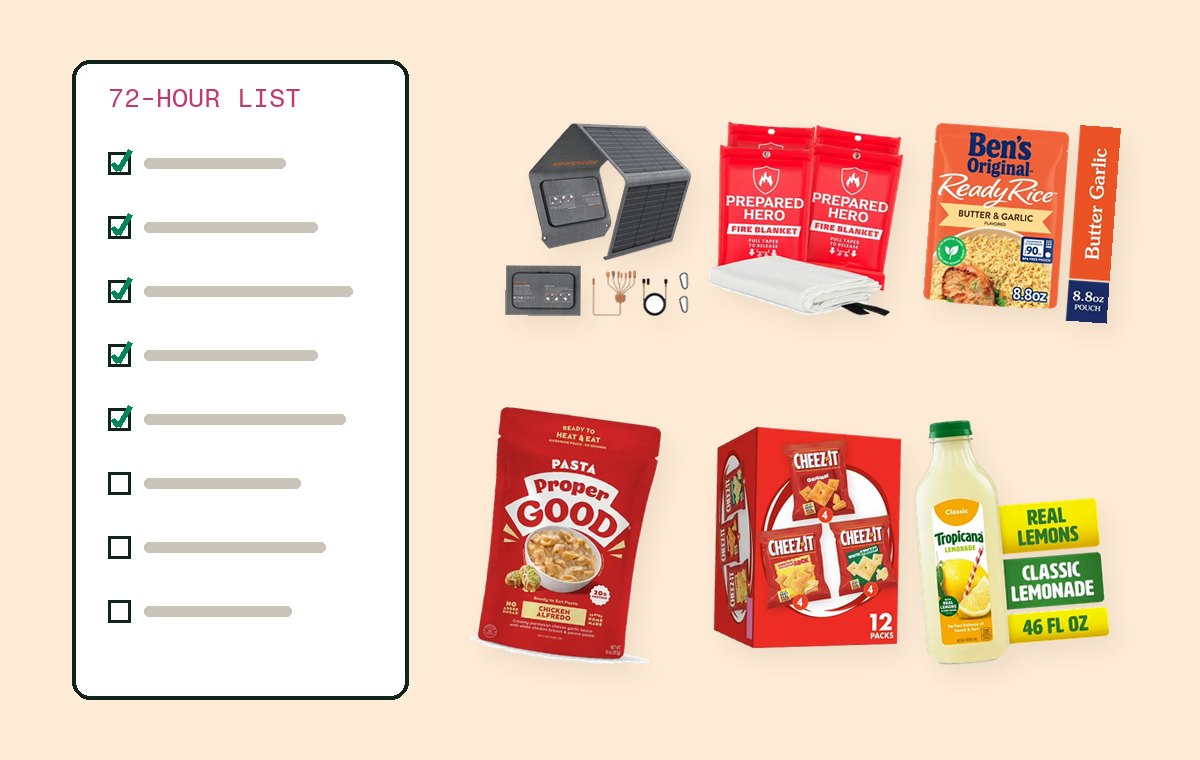
- Alfredo Ready to Serve Meal: a pouch that keeps in the cupboard and can be eaten warm or at room temperature.
- Ready Rice Butter and Garlic: fast to heat if you have a gas stove or camp burner.
- Cheese crackers, animal crackers and roasted edamame for snacks with some protein.
If the power goes out, keep the freezer closed. A full freezer stays cold far longer than a half-empty one, so eat from the fridge first.
2. Water and drinks
Store plain water first. Juice drinks like apple juice and lemonade are a welcome extra, especially for kids, but they do not replace water.
3. Power and light
A portable solar charger keeps phones alive for weather alerts. If you have a car, RV or backup battery, a 12V solar panel can trickle charge it during daylight. Charge every power bank the night before a storm is forecast.
4. Fire safety
Candles and space heaters raise the risk of small fires. Keep a fire blanket near the kitchen and another near wherever you are heating. Never run a generator or grill indoors or in a garage.
5. Check it twice a year
An easy habit is to check your storm shelf when the clocks change. Swap out anything close to its date, test your chargers and make sure everyone knows where the kit lives.
This article is general information, not professional advice. Product details are on each product page.